

























Every morning at 8:25 a.m., before the first bell rings, many students walk onto campus holding iced coffees and brightly colored energy drinks.
What used to be an occasional treat for oneself has now become a daily routine for many here at Granite Hills High School. As the caffeine intake of these drinks increases among students, questions arise about how it affects their brains, bodies, and overall performance in class.
More students than ever are relying on coffee and energy drinks to make it through the school day, from large iced coffees to energy drinks that are full of caffeine, despite the possible health impacts.
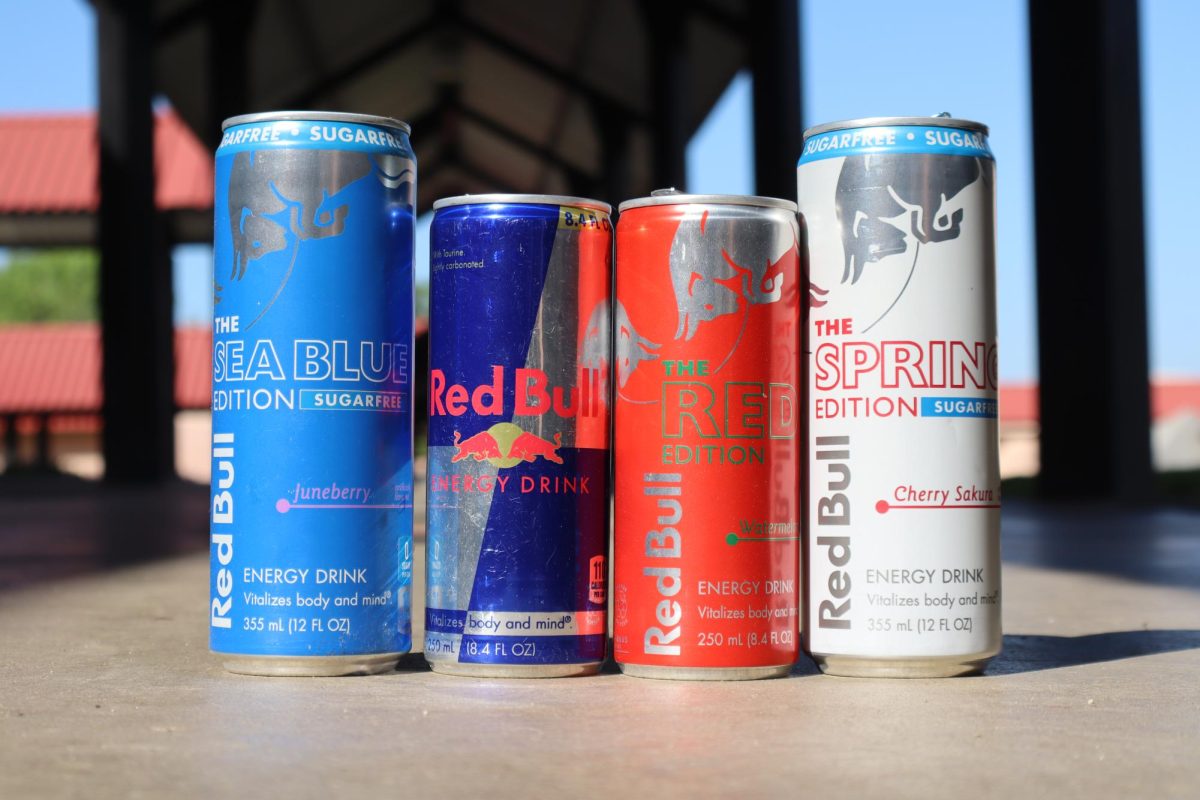
“I have Red Bull almost every morning,” said Granite Hills senior Maria Rodriguez. “ I drink them because they help me stay awake during school hours.”
During a recent morning of observation, about 1 out of 3 students walked in with drinks from Starbucks and Dutch Bros or an energy drink. Most of these drinks were medium or large. Some even walked in carrying multiple drinks.
Teachers were also seen carrying coffee cups, showing that caffeine is not limited only to students.
Energy drinks like Red Bull and Monster show up everywhere on campus, and when students were asked why they drink caffeinated drinks, they gave similar responses:
- “I like the taste.”
- “It wakes me up.”
- “It energizes me.”
- “Only once in a while.”
- “Mostly during busy days.”
Most students claimed they only had these for the taste, without knowing the real harm they were causing themselves.
Students may not realize how much caffeine they are consuming in a single drink or what caffeine really is.
Caffeine is a drug that increases the activity of the brain and the nervous system. It stimulates the body and makes people feel more awake and alert. It can temporarily improve focus and reduce fatigue.
But for teens, the effects are stronger. Because teen brains are still developing, caffeine can have a greater impact on sleep and stress levels than it does in adults, according to an article on the American Medical Association website.
Some of these side effects include:
- Digestive issues
- Increased heart rate and blood pressure
- Jitterness
- Trouble sleeping
- Headaches
- Fatigue when the caffeine wears off
- Anxiety
There is also the possibility of dependency. When students rely on caffeine daily, their bodies may begin to expect it. Without it, they may be more irritable than usual or tired.
Ironically, students who drink caffeine to stay awake feel they need it because they sleep less, which leads to needing even more caffeine per day.
“I usually have a Celsius energy drink in the mornings because I need to keep myself awake to get through the day,” Granite Hills senior Nicole Perez said. “I usually go to sleep really late because I’m always on my phone until very late.”
School administration has shown its concern about caffeine and energy drinks.
Assistant principal Mr. Plyman shared his thoughts on the trend.
“Energy drinks are bad for you, don’t drink them,” Plyman said.
While the comment was short and brief, it reflects the school’s concern regarding energy drinks.
The health expert recommended that the amount for teenagers to consume is about 100 milligrams of caffeine per day, but most popular drinks exceed that amount in a single serving. A large coffee or a 16-ounce energy drink can contain double or even triple that recommendation. A 12-ounce Red Bull contains 114 milligrams of caffeine.
Regardless of the concerns, caffeine continues to be a common part of many morning routines here at Granite Hills. Whether it’s for the taste, energy, or simply a habit, drinks appear here to stay.